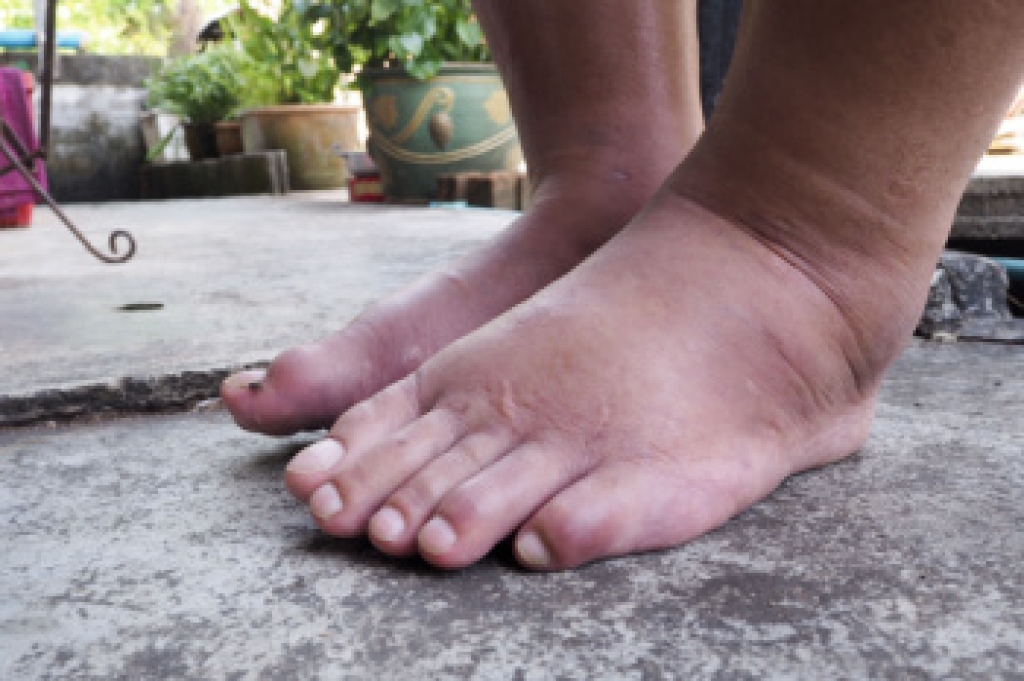
Causes and Treatment for Swollen Feet

Swelling of the feet can develop when excess fluid collects in the tissues of the feet, ankles, or lower legs. This buildup is called edema. Swelling can affect one or both feet and can sometimes extend into the legs. Gravity can make swelling more noticeable in the lower body, especially after standing for long periods of time. Long airplane flights or car rides can also contribute to swollen feet and ankles. In some cases, swelling follows an injury or surgery involving the foot, ankle, or leg. The area can feel tight, heavy, or uncomfortable.

Several health problems can cause swelling in the feet. Poor circulation in the leg veins can allow fluid to collect in the lower limbs. A blood clot or infection can also cause swelling, particularly when one leg is affected. Swelling can also be connected to problems involving the heart, kidneys, or liver because these conditions can cause excess fluid to remain in the body. Certain medications can contribute to swelling as well. Sudden swelling deserves attention, especially when the foot or leg becomes red or warm. Swelling accompanied by chest pain or shortness of breath requires immediate emergency care.

A podiatrist can examine swollen feet and ankles and look for signs that help identify the cause. The evaluation includes discussing when the swelling began, whether one or both feet are affected, and what other symptoms are present. A podiatrist can assess circulation and examine the skin for changes linked to swelling. Diagnostic testing can also help determine what is causing the problem. Treatment depends on the underlying cause rather than the swelling alone. If your feet or ankles have become swollen, it is suggested that you schedule an appointment with a podiatrist for a diagnosis and appropriate treatment.

Swollen feet can be a sign of an underlying condition. If you have any concerns, contact one of our podiatrists of Eastern Carolina Foot & Ankle Specialists. Our doctors can provide the care you need to keep you pain-free and on your feet.

Swollen feet are a common ailment among pregnant women and people who stand or sit for extended periods. Aging may increase the possibility of swollen feet and patients who are obese often notice when their feet are swelling too. There may be medical reasons why swollen feet occur:

  • Phlebitis - A condition that causes the veins to become inflamed and can also cause leg pain.
  • Liver disease - This may lead to low blood levels of albumin which is a protein. This can cause fluid in the blood to pass into the tissues and several areas of the body can become swollen.
  • Heart failure - When the heart doesn’t pump properly the blood that is normally pumped back to the heart can pool in the veins of the legs causing swollen feet.
  • Kidney disease - One of the main functions of the kidneys is releasing excess fluid in the body. This type of condition can make it difficult for the kidneys to function properly, and as a result the feet may become swollen.
  • Deep-vein thrombosis (DVT)- This is a serious condition where blood clots form in the veins of the legs. They can block the return of blood from the legs to the heart which may cause the feet to swell. It is important to be treated by a podiatrist if this condition is present.

Swollen feet can also be caused by bone and tendon conditions, including fractures, arthritis, and tendinitis. Additionally, there may be skin and toenail conditions and an infection may cause the feet to swell. Patients who take medicine to treat high blood pressure may be prone to getting swollen feet. 

Many patients elevate their feet to help relieve the swelling and this is generally a temporary remedy. When a podiatrist is consulted the reason behind the swelling can be uncovered and subsequently treated.

If you have any questions please contact our office located in Greenville, NC . We offer the newest diagnostic and treatment technologies for all your foot and ankle needs.


Read more about Swelling of the Feet

How Podiatrists Diagnose and Treat Flat Feet

Flat feet occur when the arches are low or absent while standing. Some people are born with this foot shape without discomfort. In other patients, the arches flatten because of an injury or weakened tendons. Arthritis and excess body weight can also contribute. Symptoms include aching in the arches, heel pain, and swelling near the inner ankle. A person also may have tired feet after standing or notice changes in the way their shoes wear. Flat feet can affect how weight moves across the feet, placing added strain on joints and soft tissues.

A podiatrist can determine whether flat feet are responsible for the pain or another problem is involved. The examination includes checking the arches while the patient sits and stands. The podiatrist studies joint motion and the patient’s walking pattern. X-rays can show bone position, arthritis, or an injury. Other imaging can provide a closer look at tendons when damage is suspected. These findings help distinguish flexible flat feet from rigid flat feet. A flexible arch appears when no weight is placed on the foot, while a rigid arch remains flat. Identifying the type and cause allows the podiatrist to recommend care that matches the patient’s needs.

Treatment focuses on reducing pain, improving support, and helping the feet work efficiently. A podiatrist can prescribe custom orthotics that support the arches and guide weight across the feet. The doctor can also recommend shoes with firm heel support, adequate cushioning, and enough room for the toes. An ankle brace can provide added stability in certain cases. When a damaged tendon or severe bone misalignment causes lasting symptoms, surgery can repair the affected structures or improve their position. Regular podiatry visits can track changes in the arches and help prevent added strain on the ankles, knees, or hips. If you have foot pain related to flat feet, it is suggested that you schedule an appointment with a podiatrist for effective relief and management solutions. 

Flatfoot is a condition many people suffer from. If you have flat feet, contact one of our podiatrists from Eastern Carolina Foot & Ankle Specialists. Our doctors will treat your foot and ankle needs.

What Are Flat Feet?

Flatfoot is a condition in which the arch of the foot is depressed and the sole of the foot is almost completely in contact with the ground. About 20-30% of the population generally has flat feet because their arches never formed during growth.

Conditions & Problems:

Having flat feet makes it difficult to run or walk because of the stress placed on the ankles.

Alignment – The general alignment of your legs can be disrupted, because the ankles move inward which can cause major discomfort.

Knees – If you have complications with your knees, flat feet can be a contributor to arthritis in that area.  

Symptoms

  • Pain around the heel or arch area
  • Trouble standing on the tip toe
  • Swelling around the inside of the ankle
  • Flat look to one or both feet
  • Having your shoes feel uneven when worn

Treatment

If you are experiencing pain and stress on the foot you may weaken the posterior tibial tendon, which runs around the inside of the ankle. 

If you have any questions, please feel free to contact our office located in Greenville, NC . We offer the newest diagnostic and treatment technologies for all your foot care needs.

Read more about Flatfoot

How Flip-Flops Affect Foot Health

Flip-flops are a popular choice during warm weather, but wearing them for long periods may affect foot comfort and movement. Unlike supportive shoes, many flip-flops have thin, flexible soles with little cushioning or arch support. They also lack straps around the heel to hold the foot securely in place. As a result, people may change the way they walk to keep the footwear from slipping off. The toes grip the sole with each step, while the stride can become shorter. These changes may place additional stress on the muscles and other structures of the feet, especially when flip-flops are worn for extended periods.


The effects of flip-flops can depend on the design of the footwear and how they are used. Thin soles may provide limited protection from hard or uneven surfaces. Lack of support may also be uncomfortable for people who already have certain foot problems. However, not every pair of flip-flops affects the feet in the same way. Some designs have thicker soles and greater arch support, which may provide more stability than basic styles. Flip-flops can be practical for short periods, but they are generally not designed for long walks or activities that require greater foot support. Persistent foot pain after wearing them may indicate an underlying problem that needs evaluation.


A podiatrist can examine the feet and determine whether footwear may be contributing to the problem. An evaluation can include assessing the arches, walking pattern, and areas of discomfort. A podiatrist can also identify foot conditions that may require more supportive footwear and provide professional guidance based on the individual’s foot structure. Choosing footwear that fits properly and supports normal movement is an important part of maintaining foot health. If wearing flip-flops is contributing to ongoing foot pain or making walking uncomfortable, it is suggested that you consult a podiatrist for an evaluation and appropriate treatment options.

Flip-flops are not always the best choice of footwear. If you have any concerns about your feet or ankles, contact one of our podiatrists from Eastern Carolina Foot & Ankle Specialists. Our doctors will assist you with all of your foot and ankle needs.

Flip-Flops and Feet

When the weather starts warming up, people enjoy wearing flip-flops.  Flip-flops are comfortable, stylish, and easy to slip on and off; they're perfect for any summer beach goer.  However, these shoes can cause harm to the feet.

How Can Flip-Flops Affect Me Long-Term?

  • Ankle problems
  • Hip problems
  • Lower back problems
  • Pain in the balls of the feet
  • Problems with foot arches
  • Changes in the way you walk

Are There Injuries Associated with Flip-Flops?

Yes.  Since flip-flops are relatively weak and do not provide the same amount of support as sneakers, people who wear flip-flops regularly are more susceptible to injuries. On top of that, the open nature of the shoe makes your feet more prone to other problems, such as cuts and even infections.  Common injuries and ailments include:

  • Sprained ankles
  • Blisters
  • Infections
  • Cuts and Scrapes

I like Wearing Flip-Flops. Are There Safe Alternatives?

When buying flip-flops, try to find ones that have sturdy soles and that are made of high-quality materials that will support for your feet.  These flip-flops will cost more but will also last longer as a result.

If you have any questions, please feel free to contact our office located in Greenville, NC . We offer the newest diagnostic and treatment technologies for all your foot care needs.

Read more about Flipping Out About Flip Flops

Reminder: When Was the Last Time...?

Custom orthotics, or shoe inserts, should be periodically replaced. Orthotics must fit properly to give you the best results. Protect your feet and ankles!

Repeated Ankle Sprains Can Lead to Ankle Instability

Ankle instability develops when the ankle repeatedly feels weak or gives way, especially after a previous sprain. A damaged ligament, which is the strong band of tissue that connects bones, does not always heal with enough strength to keep the ankle stable. As a result, the ankle can feel unreliable while walking, climbing stairs, or changing direction. Risk factors include previous ankle sprains, weak ankle support, and playing sports that involve quick turns. Ankle instability also affects people whose jobs require standing or walking for long periods. Ignoring these symptoms can increase the chance of another injury and can place extra stress on nearby joints. 

A podiatrist evaluates the ankle to determine why it feels unstable and whether damaged ligaments or other structures are contributing to the problem. They check ankle movement, strength, and balance. Imaging tests, like X-rays or an MRI scan, can help reveal ligament damage or other injuries. Treatment focuses on improving ankle stability and reducing the risk of repeated sprains. A podiatrist can recommend ankle-support devices that match your condition. Custom orthotics can improve foot alignment and reduce strain on the ankle. Bracing also helps protect the joint during daily activities. When ligament damage is severe or repeated ankle sprains continue despite treatment, surgery can restore stability by repairing or rebuilding the damaged ligaments.

Prompt treatment gives the ankle the best chance to become more stable and comfortable. Delaying care can lead to repeated injuries, reduced confidence while walking, and damage to the cartilage that cushions the joint. A podiatrist continues to monitor healing and adjusts treatment based on your progress. Regular follow-up visits help confirm that the ankle is becoming stronger and more stable. Early diagnosis also helps patients return to work, sports, and daily activities with greater confidence. If you have a feeling that your ankle is giving way, it is suggested that you schedule an appointment with a podiatrist for a diagnosis and appropriate treatment.

Although ankle sprains are common, they aren’t always minor injuries. If you need your ankle injury looked at, contact one of our podiatrists from Eastern Carolina Foot & Ankle Specialists. Our doctors can provide the care you need to keep you pain-free and on your feet.

How Does an Ankle Sprain Occur?

Ankle sprains are the result of a tear in the ligaments within the ankle. These injuries may happen when you make a rapid shifting movement while your foot is planted. A less common way to sprain your ankle is when your ankle rolls inward while your foot turns outward.

What Are the Symptoms?

  • Pain at the sight of the tear
  • Bruising/Swelling
  • Ankle area is tender to touch
  • In severe cases, may hear/feel something tear
  • Skin discoloration

Preventing a Sprain

  • Wearing appropriate shoes for the occasion
  • Stretching before exercises and sports
  • Knowing your limits

Treatment of a Sprain

In many cases, the RICE method (Rest, Ice, Compression, and Elevate) is used to treat ankle sprains. However, you should see a podiatrist to see which treatment option would work best with your injury. In severe cases, surgery may be required.

It is important to ask your doctor about rehab options after you receive treatment for your injury. Stretching, strength training, and balance exercises may help the ankle heal while also preventing further injury.

If you have any questions, please feel free to contact our office located in Greenville, NC . We offer the newest diagnostic and treatment technologies for all your foot care needs.

Read more about Three Grades of Ankle Sprains
scroll to top